butterfl.ai
Interactive exhibit demonstrating AI's environmental and productivity trade-offs through tool-enabled agentic workflows.
Future Cities Laboratory Global and ETH ZürichFebruary 2026
Project Name
Project Date
Affiliation
Team
Joshua's Contribution
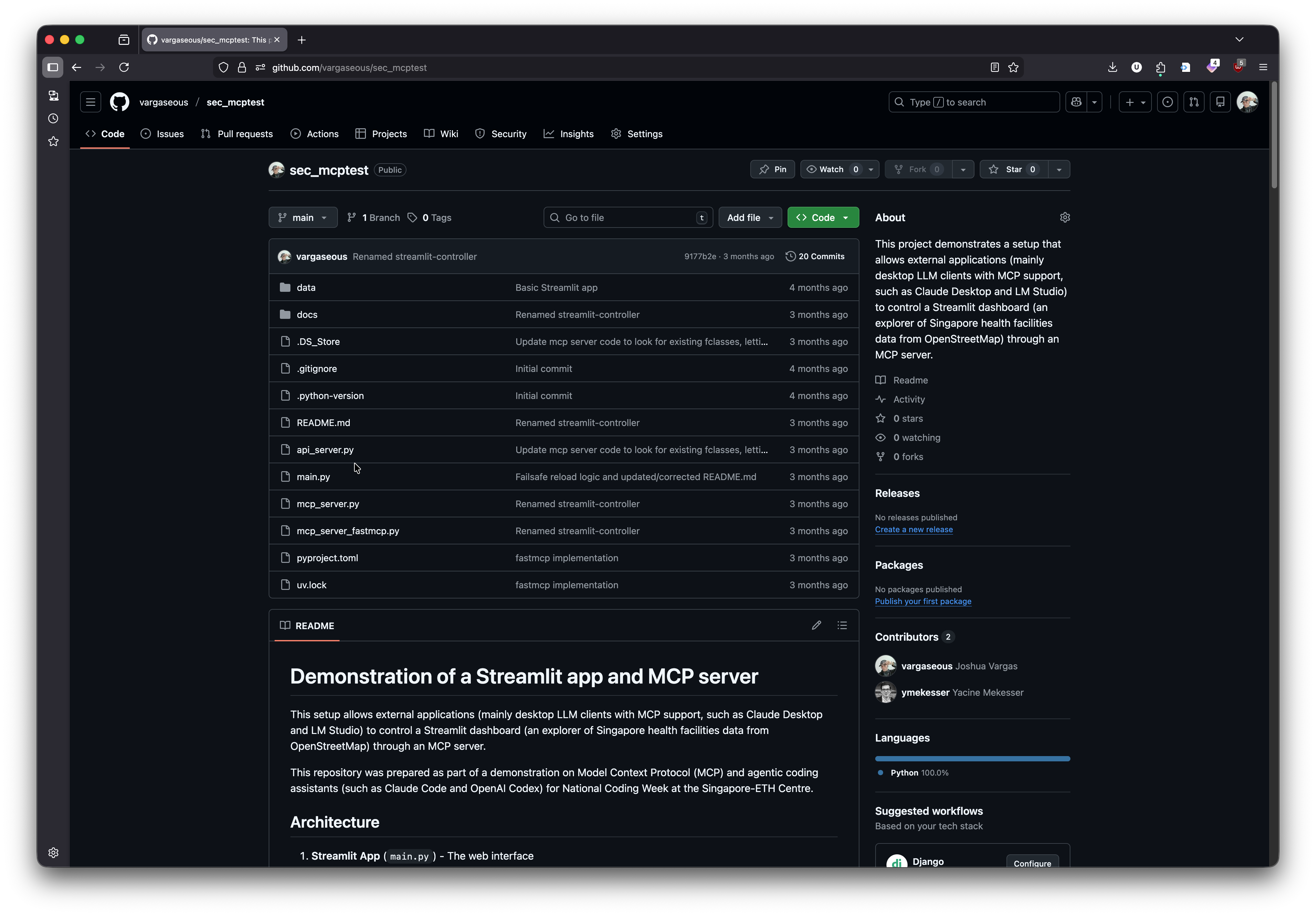
This prototype enables external applications (mainly desktop LLM clients with MCP support, such as Claude Desktop and LM Studio) to control a Streamlit dashboard (an explorer of Singapore health facilities data from OpenStreetMap) through an MCP server. This repository was prepared as part of a demonstration on Model Context Protocol (MCP) and agentic coding assistants (such as Claude Code and OpenAI Codex) for National Coding Week at the Singapore-ETH Centre.
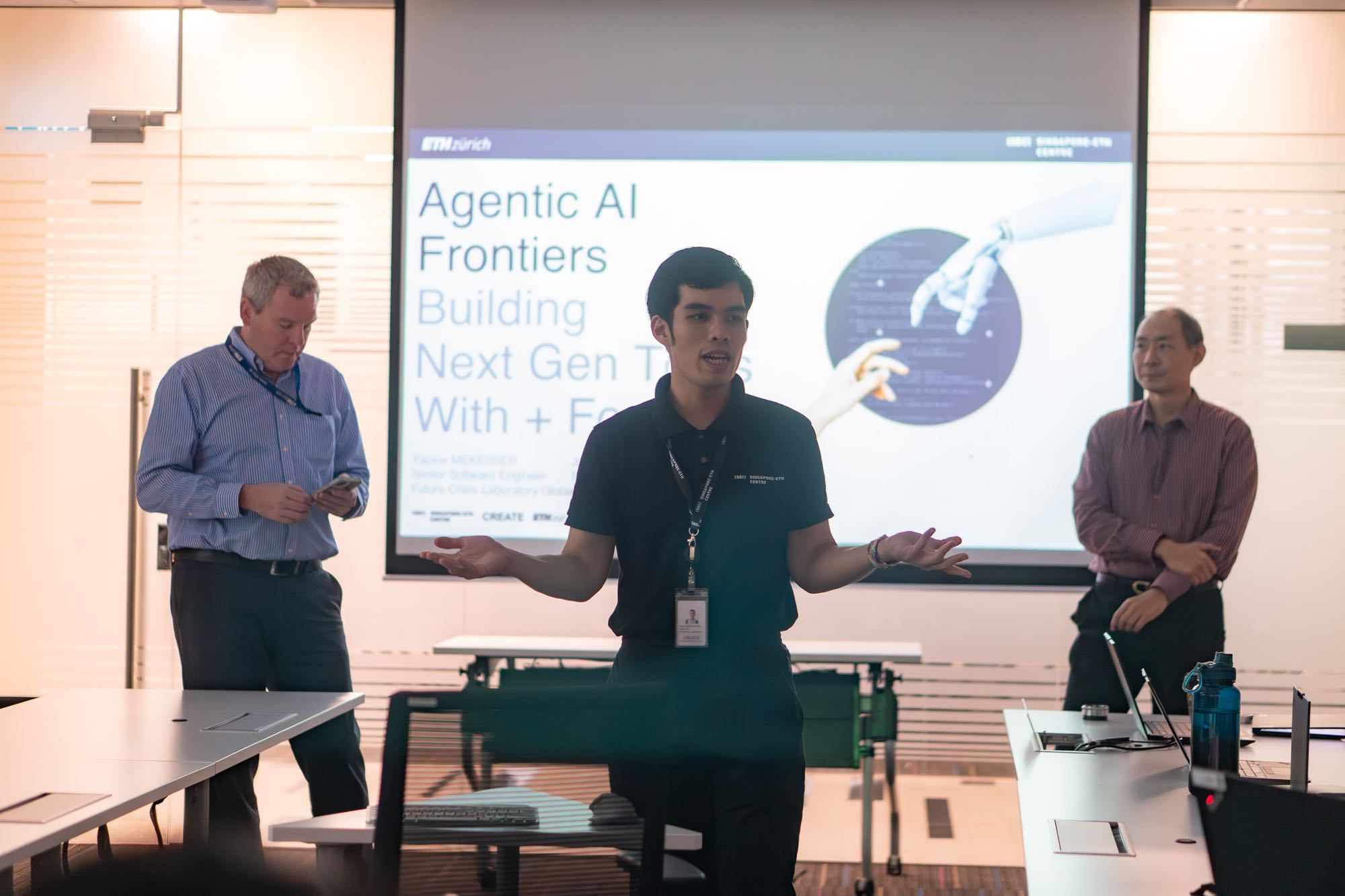
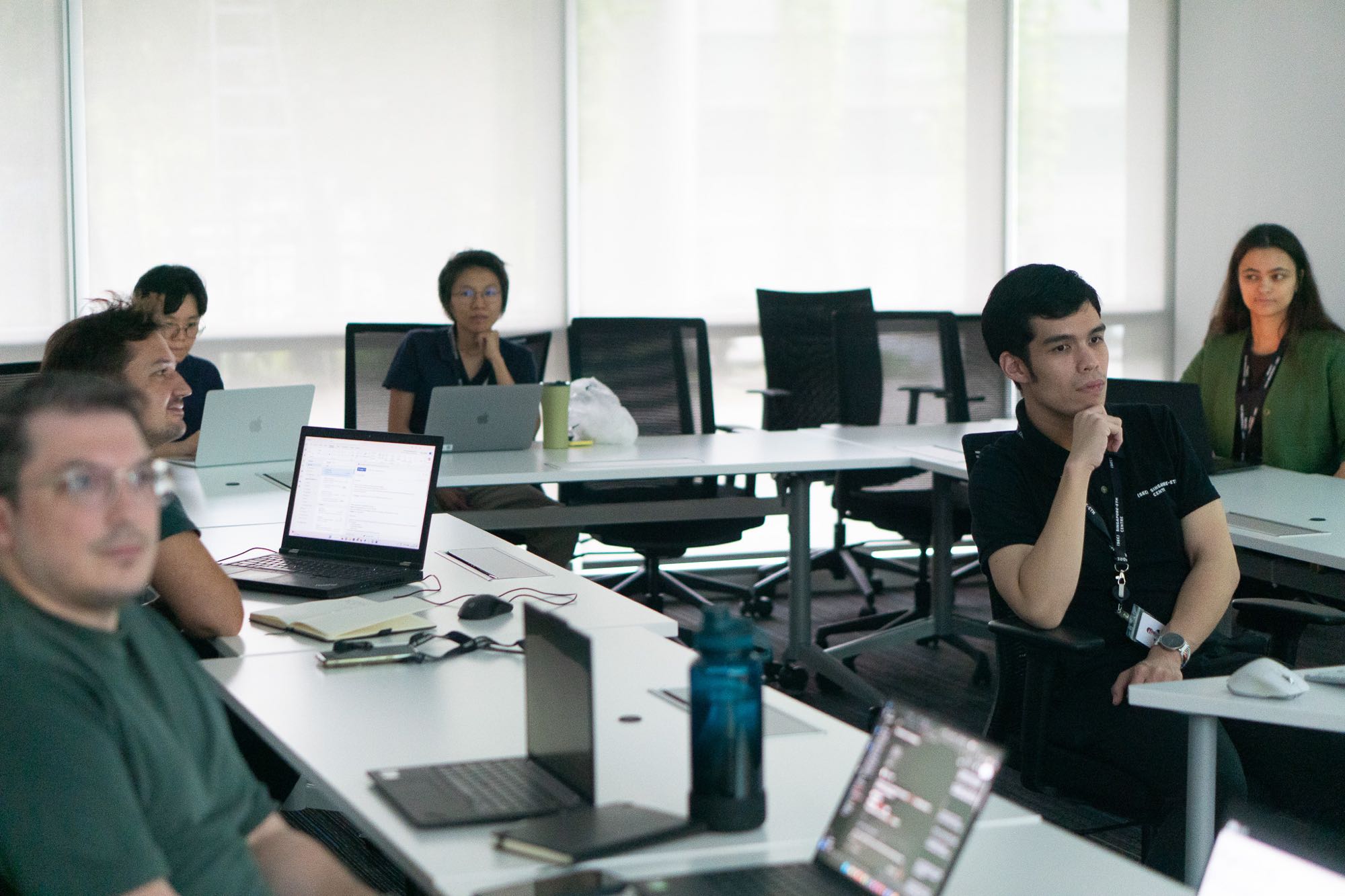
This prototype was developed as a template and example project for the workshop ‘Agentic AI Frontiers: Building Next-Generation Tools with AI’ at the Singapore-ETH Centre, designed by Joshua VARGAS and Yacine MEKESSER.
The project aimed to explore two contributions by Anthropic to the generative AI community. The first is the Model Context Protocol (MCP), which aims to enable large language models - not only Claude, but also competitors like ChatGPT and open-source offline LLMs - to interact with other software. MCP is designed as a "USB-C port for AI," and with an MCP server for your software tools, developers will be able to seamlessly let AI models use external tools to answer questions. The second component of the workshop involves learning how to use Claude Code to accelerate development, and how to set it up to require user review and respect internal safety protocols.
The prototype itself enables the use of an external tool – normally desktop LLM clients with MCP support, such as Claude Desktop and LM Studio – to control a Streamlit dashboard which shows an interactive geospatial visualisation of health facilities in Singapore based on 2025 OpenStreetMap data.
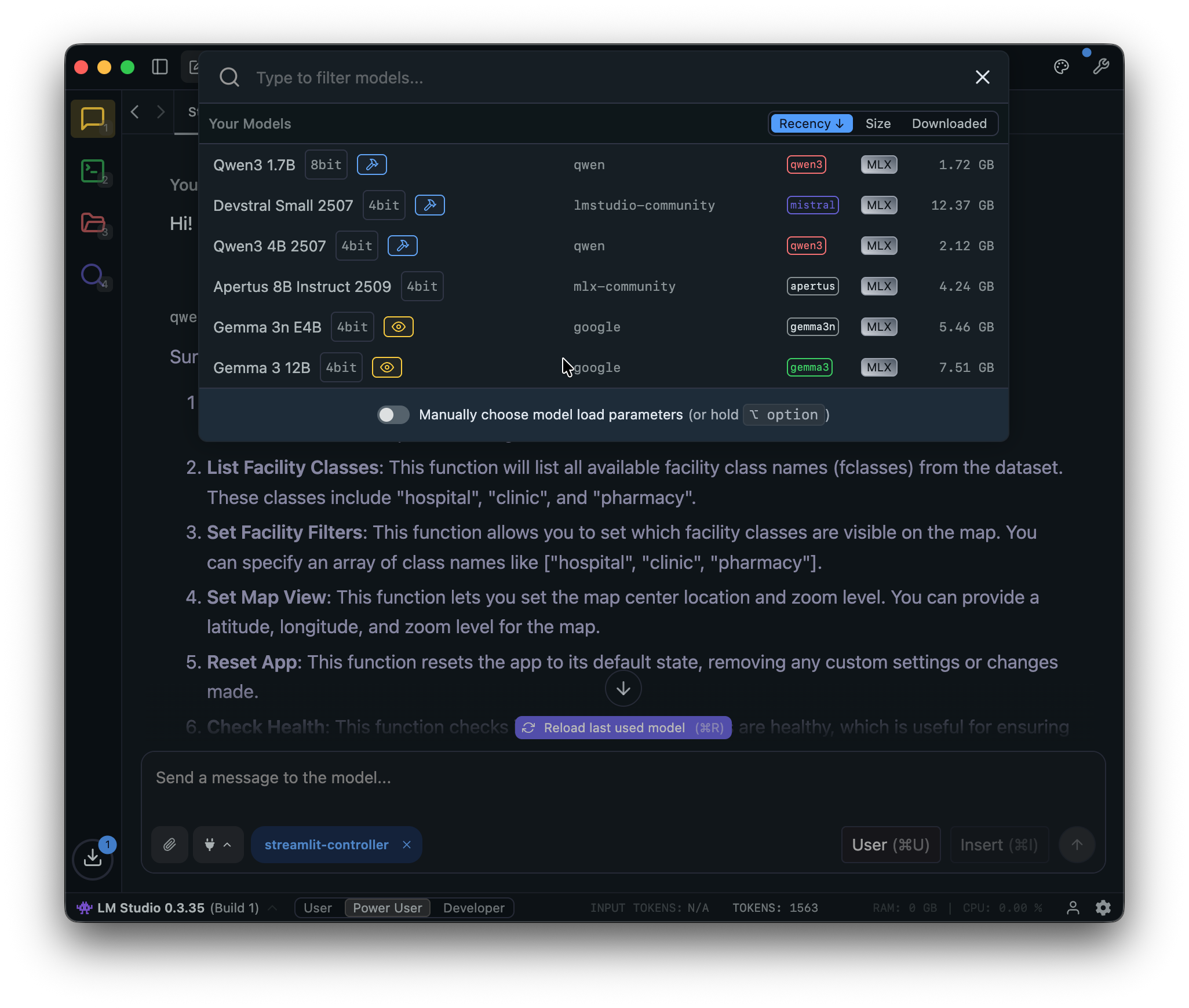
What I found to be a delightful surprise is that, with careful and comprehensive tool description writing, even very small LLMs are able to properly adhere to instructions. This enables incredible on-device performance, with lower latency than connecting to an online inference service, making the case for using small LLM models for low-complexity tasks.
Click on an image to expand it.
Tap on a photo to expand it.
code + design + sound © 2026 joshua vargas